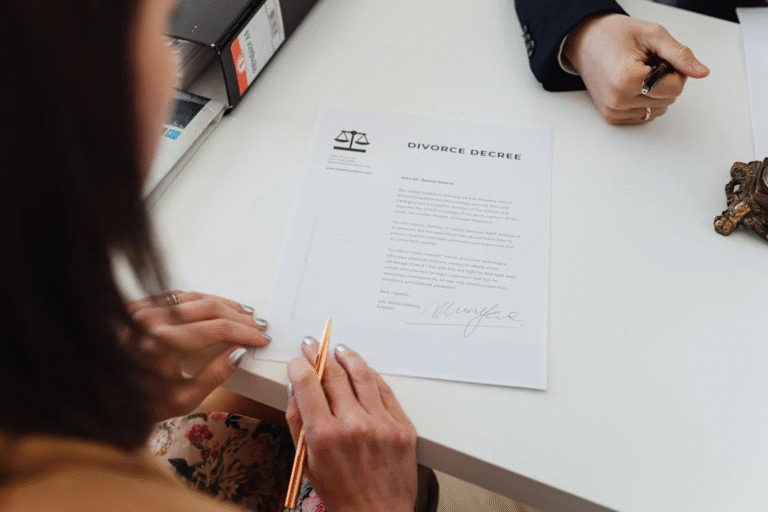




What happens when a marriage ends, but the stakes are high—shared businesses, multiple properties, or strong disagreements about parenting? For many couples, the thought of a drawn-out courtroom battle can feel overwhelming.
This is where mediation changes the picture.
At Daniel Ogbeide Law, we’ve seen how mediation can simplify even the most complex divorce cases. Whether you’re facing a high-asset split, a custody disagreement, or a contested separation, mediation offers a structured way to reach agreements without the strain of constant courtroom conflict. As one of the leading divorce law firms in Houston, our focus is always on helping families find clarity, control, and closure through practical, cooperative methods.
In this blog, we discuss how mediation can make even the most complex divorces manageable. We’ll explain what mediation is, why it works so well in high-conflict and high-asset cases, and how it protects your time, privacy, and peace of mind.
What Makes a Divorce “Complex”?
Before understanding how mediation simplifies the process, it’s worth identifying what makes certain divorces more complicated than others.
A complex divorce typically involves one or more of the following factors:
- Significant or diverse assets– Businesses, investment portfolios, multiple real estate properties, or retirement accounts.
- Child custody disputes– When both parents want primary custody or disagree about visitation schedules.
- Long-term marriages– Especially when both partners’ finances and lives are deeply intertwined.
- Common law marriages– In Texas, proving or disproving a common law marriage adds another legal layer.
- Disagreements over spousal support– When one partner seeks financial support and the other contests it.
Each of these issues can easily turn a straightforward separation into a drawn-out, emotionally taxing case. But mediation helps prevent that outcome by focusing on cooperation instead of confrontation.
How Mediation Works in Complex Divorce Cases
Mediation is a structured yet flexible process where both parties meet with a neutral third-party mediator to discuss their issues and reach a mutually acceptable resolution. The mediator doesn’t make decisions like a judge would—instead, they facilitate productive communication and help couples find common ground.
For families dealing with complex divorces, this process offers several benefits:
1. Control Over the Outcome
In court, a judge decides how assets are divided and who gets custody. In mediation, you and your spouse make those decisions together—with legal guidance—so the results better reflect your priorities.
2. Privacy and Confidentiality
Court filings are public, but mediation is private. This matters greatly in high-asset divorces where sensitive financial details or business information are involved.
3. Less Emotional Strain
By encouraging dialogue instead of hostility, mediation reduces the emotional impact on both spouses and their children.
4. Faster Resolutions
Litigation can take years, but mediation can often conclude in a matter of weeks or months, depending on the issues involved.
5. Preservation of Relationships
Especially when children are involved, maintaining a cooperative relationship after divorce is vital. Mediation fosters that cooperation from the start.
Why Mediation Is Especially Effective for High-Asset Divorces

Divorces involving substantial financial assets are among the most complicated. There are businesses to value, properties to divide, investments to allocate, and taxes to consider. Traditional litigation can turn this process into an exhausting and expensive battle.
Mediation, on the other hand, encourages a solutions-based discussion:
- Couples can bring in financial experts, accountants, or business valuators to assist in discussions.
- Sensitive financial data stays confidential instead of becoming part of a public record.
- The process allows flexibility in creating customized solutions—such as one spouse keeping a business while the other receives other assets of equal value.
- This level of collaboration often produces more equitable outcomes and helps both sides move forward without prolonged resentment or financial strain.
For those working with a high-asset divorce lawyer in Houston, mediation can complement strong legal counsel by turning conflict into communication.
Mediation Helps Parents Focus on What Truly Matters
When children are involved, emotions run high. Custody disputes are among the most challenging aspects of any divorce. Mediation gives parents a chance to set aside blame and focus on the best interests of their children.
Here’s how mediation helps with custody-related concerns:
- Encourages cooperation:Parents can design parenting plans that work for both households.
- Reduces exposure to conflict:Children are spared from the tension of courtroom disputes.
- Creates flexibility:Parents can make agreements that evolve as their children grow.
- Promotes long-term stability:A cooperative start increases the chances of smooth co-parenting in the future.
For parents working with a contested divorce attorney in Houston, mediation can serve as an effective tool to bridge disagreements before they escalate.
When Mediation May Not Be the Right Fit
While mediation is powerful, it’s not ideal for every situation. If one spouse refuses to communicate, hides assets, or has a history of coercive behavior, mediation might not be appropriate. In such cases, traditional litigation—guided by a divorce lawyer in Houston, TX—may be necessary to ensure fairness and protection.
That said, even when full mediation isn’t possible, partial mediation can still resolve specific disputes (like child support or property division) and narrow down what must be handled in court.
A Smarter Path Through Divorce

Is it possible for a complex divorce to end without years of hostility, endless hearings, and unnecessary expenses? With mediation, the answer is often yes.
At Daniel Ogbeide Law, we’ve helped many families use mediation to find common ground in even the most complicated situations. Our team combines deep experience in Texas family law with a compassionate, results-driven approach. Whether your case involves high-value property, a contested custody arrangement, or a common law marriage, we provide the strategic guidance needed to move forward with clarity and control.
If you’re facing a complex divorce, you don’t have to face it alone. Contact Daniel Ogbeide Law, one of the leading divorce law firms in Houston, to learn how mediation can simplify your separation and help you reach a resolution that protects your future.