



Can you be married without ever saying, “I do”?
It’s a question that surprises many couples who have lived together for years, shared finances, and introduced each other as husband and wife—only to later discover that, under Texas law, their relationship may already qualify as a common law marriage.
At Daniel Ogbeide Law, we’ve seen firsthand how misunderstandings about common law marriage lead to stressful and costly disputes. As family law and litigation attorneys in Houston, we help clients establish or contest the existence of common law marriage and protect their rights when separation becomes inevitable.
In this blog, we explain what qualifies as a common law marriage, the legal effects of a common law marriage, and what happens when such relationships break down.
What Is a Common Law Marriage?
A common law marriage—sometimes referred to as an “informal marriage”—is a legally recognized relationship between two partners who live together and present themselves as married, without having obtained a marriage license or held a formal ceremony.
Texas is one of the few states that still recognizes this type of union. Under Texas Family Code §2.401, three specific elements must be proven for a common law marriage to exist:
- Agreement to Be Married– Both partners must have a mutual understanding or agreement that they are married.
- Cohabitation– The couple must live together in Texas as husband and wife.
- Representation to Others– The partners must represent to the public that they are married (for instance, by using the same last name, filing joint tax returns, or referring to each other as spouses).
Without all three elements, a relationship—even one that lasts many years—does not meet the state’s definition of common law marriage.
Proving a Common Law Marriage
Establishing that a common law marriage exists can be straightforward for some couples but highly contested for others. Because there’s no formal certificate, proof depends on documentation and conduct. Courts typically consider:
- Joint bank accounts, mortgages, or leases
- Tax returns filed jointly
- Insurance policies listing a partner as “spouse”
- Correspondence or legal documents referring to one another as husband and wife
- Witness statements from friends or relatives
- Social media posts or announcements showing public recognition of marriage
These pieces of evidence help demonstrate that both partners agreed to be married and acted accordingly. However, proving these elements becomes difficult when one party denies the relationship’s legal status—particularly during separation or inheritance disputes.
The Legal Effects of a Common Law Marriage

Understanding the legal effects of a common law marriage is essential, as Texas treats these unions as equivalent to formal marriages once established. This means both partners acquire the same legal rights and responsibilities as any married couple.
Some of the most significant legal effects include:
- Community Property Rights:Assets and debts acquired during the relationship are considered community property, subject to division upon separation.
- Spousal Support (Alimony):A partner may seek post-separation financial support under certain conditions.
- Inheritance Rights:If one partner dies without a will, the surviving partner may inherit as a legal spouse.
- Parental Rights:Children born to a common law marriage have the same legal status as those born to married parents.
- Tax and Insurance Benefits:Once recognized, the couple may be eligible for spousal tax benefits, health insurance coverage, and other marital privileges.
These rights can be a major advantage for some couples—but also a source of conflict when one partner wishes to deny that a marriage ever existed.
Ending a Common Law Marriage
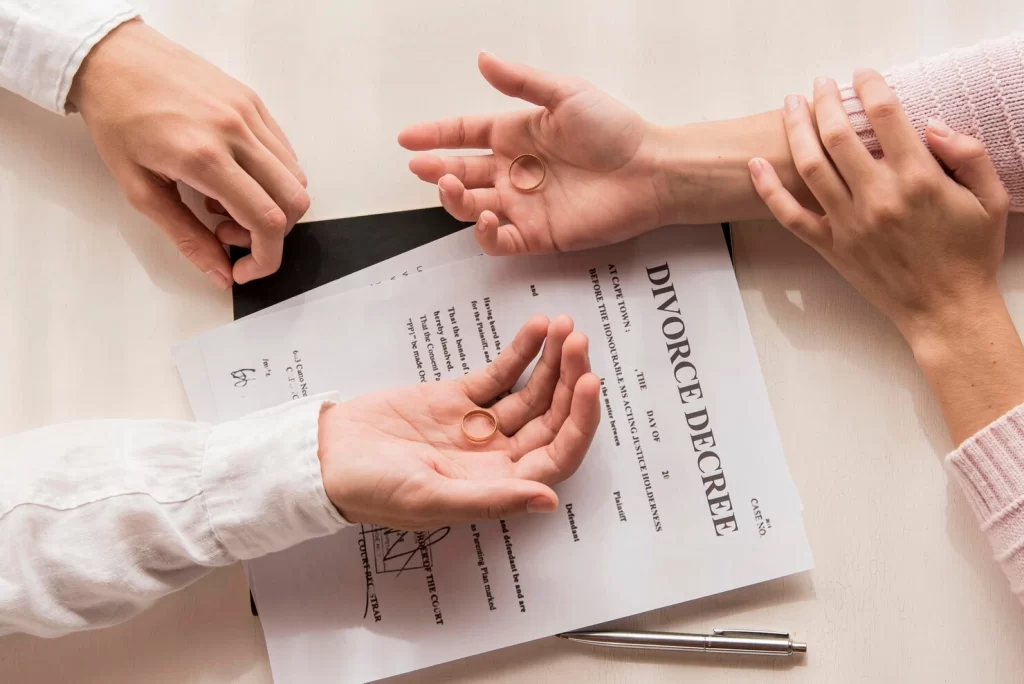
When a common law marriage ends, the separation process is not as simple as moving out or ending the relationship. The couple must go through a formal divorce process to dissolve the union legally.
Failing to do so can lead to long-term consequences, including:
- Property division disputes years later
- Claims for spousal support
- Complications in future marriages or estate matters
A common law divorce lawyer in Houston can help file for divorce, gather evidence to establish (or contest) the existence of the marriage, and ensure assets are divided fairly.
It’s important to understand that the burden of proof falls on the person claiming that a common law marriage existed. This is why proper documentation, legal guidance, and strategic action are essential from the start.
Common Myths About Common Law Marriage
Many misconceptions surround common law marriage. Let’s address a few of the most common:
- Myth 1: Living together for seven years automatically creates a common law marriage.
Fact:There is no specific time requirement. What matters is agreement, cohabitation, and public representation. - Myth 2: You can’t have a common law marriage if one partner is still legally married to someone else.
Fact: This is true—both partners must be free to marry. - Myth 3: You can simply “walk away” from a common law marriage.
Fact:A legal divorce is required to end it, just like a ceremonial marriage. - Myth 4: Only low-income or rural couples have common law marriage
Fact:Common law marriage crosses all social and economic boundaries.
When Separation Turns Contentious
Disputes often arise when couples who once shared a household disagree about whether they were legally married. One partner might seek spousal support or property division, while the other insists no marriage existed.
This is where experienced family law and litigation attorneys in Houston become vital. Legal representation can help:
- Collect and organize evidence proving (or disproving) the marriage
- Protect financial and parental rights during separation
- Guide clients through court filings and mediation
- Prevent future disputes by achieving a clear legal resolution
In some cases, working with a family law mediation attorney in Houston can help couples reach agreements without going through a lengthy and emotionally charged trial. Mediation encourages cooperation and can lead to fair settlements regarding property division and child custody.
Why Legal Guidance Is So Important

Without clear documentation or mutual acknowledgment, proving or disproving a common law marriage can be difficult and emotionally draining. Missteps in handling these issues can lead to financial loss, unresolved property claims, and years of legal complications.
Professional guidance ensures that each step—whether establishing the marriage or seeking its dissolution—is legally sound and properly documented.
Protecting Your Rights in Common Law Relationships
Have you ever wondered what would happen if your long-term relationship ended tomorrow? Would you have a claim to your shared home, savings, or retirement accounts?
These are the questions that highlight the importance of understanding your legal status. At Daniel Ogbeide Law, we assist individuals and couples with every stage of informal marriage—from proving its existence to guiding them through a separation or divorce.
Our team includes some of the most dedicated common law marriage lawyers in Houston, committed to ensuring our clients’ rights are protected in even the most complex family law cases. Whether through litigation or mediation, we strive to secure fair outcomes and reduce the emotional toll of legal conflict.
If you believe you may be in a common law marriage—or are facing a dispute about one—contact Daniel Ogbeide Law today. We can help you clarify your legal standing, protect your assets, and take the right steps toward a secure resolution.