
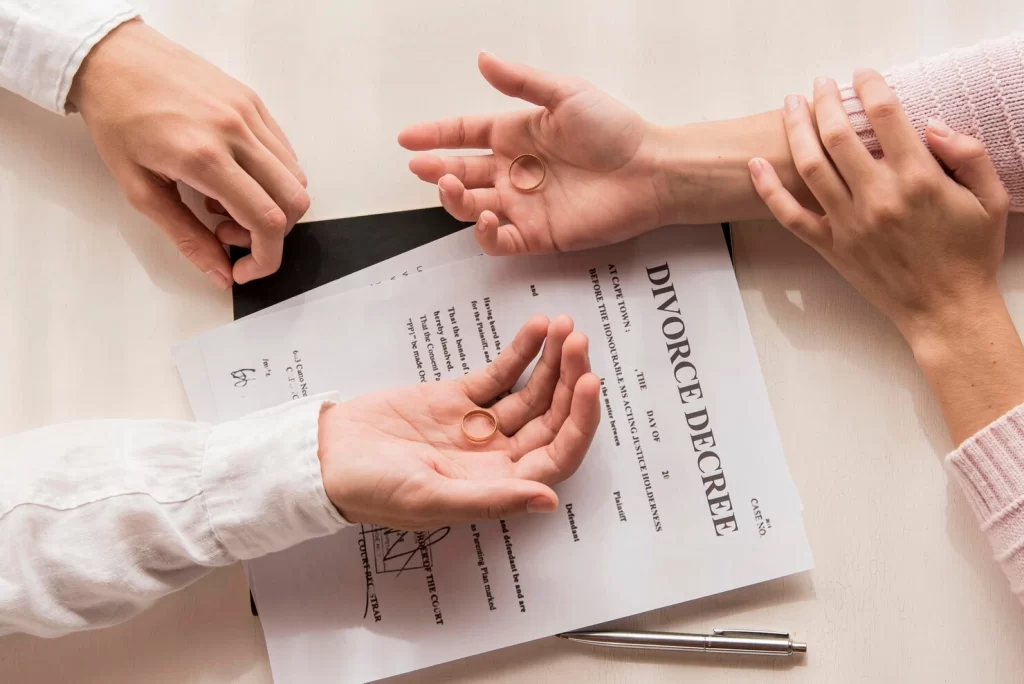



Can a couple be “married” even without ever signing a marriage license? In many states, including Texas, the answer is yes—under certain conditions. Common law marriage gives long-term partners the same legal rights and responsibilities as formally married couples. But when such a relationship ends, many couples are caught off guard by how complex the legal separation can be.
According to the Texas Family Code, a couple can be considered married at common law if they agreed to be married, lived together as spouses, and represented themselves as married to others. Yet, when the relationship deteriorates, the process of ending it legally—known as common law marriage and divorce—can be just as complicated, if not more, than ending a traditional marriage. Property disputes, support obligations, and even the question of whether a marriage existed at all can spark intense legal battles.
At Daniel Ogbeide Law, our family law and litigation attorneys in Houston assist clients in clarifying and defending their rights in these situations. We help clients understand whether their partnership qualifies as a legal marriage, what property they may be entitled to, and how to protect their interests if separation occurs.
In this blog, we’ll explain how the law treats the end of a common law marriage, what rights and obligations apply, and how our team can help ensure those rights are upheld.
What Counts as a Common Law Marriage?
Before a court can handle the separation of a common law couple, it must first determine whether a marriage existed in the eyes of the law.
To establish a valid common law marriage in Texas, three elements must be proven:
- Mutual Agreement:Both partners must have agreed to be married—not just live together.
- Cohabitation:They must have lived together in Texas as a married couple.
- Representation:They must have represented to others that they were married (for example, introducing each other as spouses, filing joint taxes, or sharing insurance).
If any of these elements are missing, the court may not recognize the relationship as a marriage. This becomes particularly important during a breakup, as the absence of legal recognition means that typical divorce protections, such as property division or spousal maintenance, may not apply.
The Legal Process of Ending a Common Law Marriage
Once a common law marriage is established, ending it requires the same legal steps as any formal divorce. The process includes filing for divorce, dividing marital property, determining support obligations, and addressing any child-related issues.
1. Proving the Marriage First
The first legal challenge often involves proving that a marriage existed in the first place. If one partner denies it, the other must provide evidence—such as joint bank accounts, lease agreements, tax returns, or social media posts—to convince the court. Without proof, the relationship may be considered a non-marital cohabitation, leaving the partner without marital rights.
2. Filing for Divorce
If the marriage is recognized, the next step is filing for divorce. A divorce law firm in Houston can assist with this process by preparing documentation, filing petitions, and ensuring compliance with all procedural requirements.

3. Division of Property
Texas is a community property state, meaning assets and debts acquired during the marriage belong equally to both spouses. In common law marriage cases, however, determining when the marriage began can be difficult. This makes identifying “community” versus “separate” property a contested issue.
Some examples of assets subject to division include:
- Real estate purchased during the relationship
- Shared bank accounts or joint investments
- Vehicles or business interests acquired together
- Retirement accounts accumulated during cohabitation
Courts will examine the evidence to determine what property qualifies as marital and how it should be divided.
4. Spousal Support (Maintenance)
Just like in formal marriages, one spouse in a common law marriage may be entitled to spousal maintenance under certain conditions. The court may award support if one partner lacks sufficient property to meet basic needs, or if that partner contributed significantly to the other’s education or career.
However, proving entitlement to maintenance can be more complex in these cases because the duration of the marriage must first be established. A common law divorce lawyer in Houston can help gather evidence to support such claims.
5. Child Custody and Support
Children of common law couples have the same legal rights as those born to formally married parents. Custody (conservatorship) and child support are handled according to Texas law, prioritizing the child’s best interests. Both parents are legally obligated to provide support, regardless of marital status.
Common Disputes in Common Law Divorce Cases
While the legal framework mirrors that of traditional divorce, common law marriage cases tend to involve additional disputes:
- Denial of Marriage:One partner may argue that no marriage existed, often to avoid property division or spousal support.
- Property Ownership Conflicts:Assets titled in one partner’s name may be contested if the other claims they were acquired during the marriage.
- Date of Marriage Disputes:Establishing when the marriage began affects property classification, eligibility for maintenance, and even child-related determinations.
- Proof Challenges:Without a marriage certificate, evidence such as photographs, witness testimony, and joint records becomes critical.
These disputes can quickly escalate, requiring experienced contested divorce lawyers to present clear and convincing evidence.
When Separation Feels Like Divorce

Ending a long-term relationship is emotionally difficult—but when that relationship is also legally recognized as a marriage, the stakes rise significantly. Questions about property, support, and even the existence of the marriage itself can make the process overwhelming.
That’s where we can help. At Daniel Ogbeide Law, our team of family law and litigation attorneys in Houston has extensive experience handling common law marriage and divorce cases. We understand the complexities involved and are committed to protecting our clients’ rights with professionalism and precision. Whether your case calls for skilled mediation or strong courtroom representation, our goal is to secure fair outcomes that allow clients to move forward with confidence.
If you believe you may be in a common law marriage—or are ready to separate from one—reach out to Daniel Ogbeide Law today. Our common law divorce lawyers can assess your situation, explain your options, and guide you toward a resolution that protects your interests and your future.