
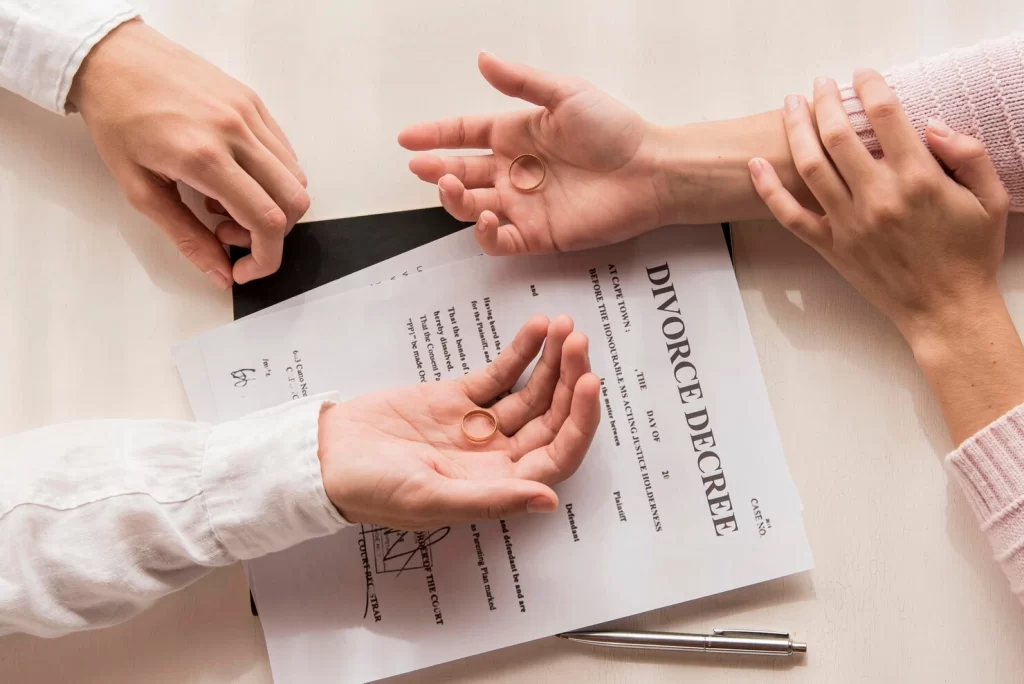



Property division in a contested divorce rarely stays simple. Even a modest estate can become complicated once spouses disagree about what belongs to whom.
Texas law provides a framework for dividing marital property. But framework does not mean formula. Every case involves its own mix of assets, debts, and history, which is exactly why disagreements can run so deep.
Below is a closer look at why property division in a contested divorce often becomes one of the most difficult parts of a Texas case.
Why Texas Starts With a Community Property Presumption
Texas is a community property state. Under Texas Family Code Chapter 3, most property either spouse holds at the time of divorce is presumed to belong to the marriage as a whole, not to one spouse individually.
That presumption is strong. A spouse who wants an asset treated as separate property must prove it with clear and convincing evidence, a higher bar than simply claiming ownership.
This starting point shapes how property division in a contested divorce unfolds. Whoever wants to remove an asset from the community estate carries the burden of proof, which is why consulting a property division attorney in Texas before making assumptions about what counts as separate property is often a smart first step.
Separate vs. Community Property: Where Disputes Begin
Under Texas law, separate property generally includes:
- Property owned before the marriage
- Property received individually as a gift
- Property received through inheritance
- Certain personal injury recoveries
Everything else acquired during the marriage is typically community property, regardless of whose name appears on the account or title.
Disputes often arise when separate and community funds get mixed together over time, a problem often called commingling. A spouse might deposit inheritance money into a joint account, then use it for years alongside community income. Untangling what remains separate can require detailed financial records, sometimes going back years, and often depends on a spouse’s ability to trace the original funds through every account they touched.
What “Just and Right” Division Actually Means
Texas courts do not automatically split community property 50/50. Under Texas Family Code Section 7.001, the court must divide the estate in a manner that is “just and right,” considering the specific circumstances of the case.
Courts may consider factors such as:
- Each spouse’s earning capacity
- Who will have primary custody of any children
- The relative size of each spouse’s separate estate
- Fault in the breakup of the marriage, in some cases
Because “just and right” leaves room for interpretation, spouses often disagree sharply about what a fair division actually looks like. One spouse may expect an equal split simply because the law is described as community property, while the other points to factors that could justify a larger share. This is one reason property division in a contested divorce often takes longer than either spouse initially expects.
Dividing Retirement Accounts and Employee Benefits

Retirement accounts add another layer of complexity. Many plans cannot simply be split by writing a check.
Instead, dividing a 401(k), pension, or similar plan usually requires a Qualified Domestic Relations Order, or QDRO. This is a separate court order, issued after the divorce, that instructs the plan administrator how to divide the account.
Getting a QDRO wrong can create real problems, including unexpected tax consequences or a plan administrator rejecting the order entirely. Because these accounts are federally regulated, the rules for drafting a valid QDRO come from federal law, not just the Texas Family Code, which means the order has to satisfy both the plan’s own requirements and the terms of the divorce decree.
Business Ownership and Valuation Disputes
When one or both spouses own a business, property division becomes significantly more complex. A business is rarely worth a simple, agreed-upon number.
Disputes commonly involve:
- How much of the business is community property versus separate property
- What valuation method should be used
- Whether business debts should offset the business’s overall value
- How a buyout, if needed, should be structured and paid over time
These disputes often require a professional business valuation, since neither spouse’s personal estimate is likely to hold up on its own. Even when both spouses hire their own valuation expert, the two figures can end up far apart, which often turns the valuation itself into a contested issue that needs to be resolved before property can even be divided.
A high-asset divorce lawyer in Houston can help coordinate the right valuation professionals so the numbers hold up under scrutiny.

Debt Division Disputes
Property division is not only about assets. Debt acquired during the marriage is generally treated as community debt as well, even if only one spouse’s name is on the account.
Common debt disputes involve:
- Credit card balances run up by one spouse without the other’s knowledge
- Who takes responsibility for a mortgage after the divorce
- Business debts tied to a spouse’s individual work
- Whether certain debt was actually used for family expenses
Because creditors are not bound by a divorce decree, both spouses can sometimes remain legally responsible to a lender even after a court divides responsibility between them.

Why These Disputes Take Longer to Resolve
Property division in a contested divorce touches nearly every other issue in the case. Retirement accounts affect spousal support calculations, which is why a spousal support attorney often gets involved alongside the property discussion rather than after it. Business valuations affect what each spouse can realistically afford going forward.
Because so much depends on getting the underlying facts right, these disputes often take real time to resolve properly, whether through negotiation or, if necessary, trial.
Talk to a Property Division Attorney in Houston, TX
If your divorce involves a home, a business, retirement accounts, or significant debt, understanding your options early can make a real difference. A property division lawyer in Houston, TX can help you sort out which issues are likely to be contested before they become bigger problems.
At Daniel Ogbeide Law, we help clients throughout the Houston area work through property division in a contested divorce, from initial document gathering through final resolution. Learn more about our approach to divorce and contested divorce cases, or contact us today to discuss the property and debt issues in your specific case.