
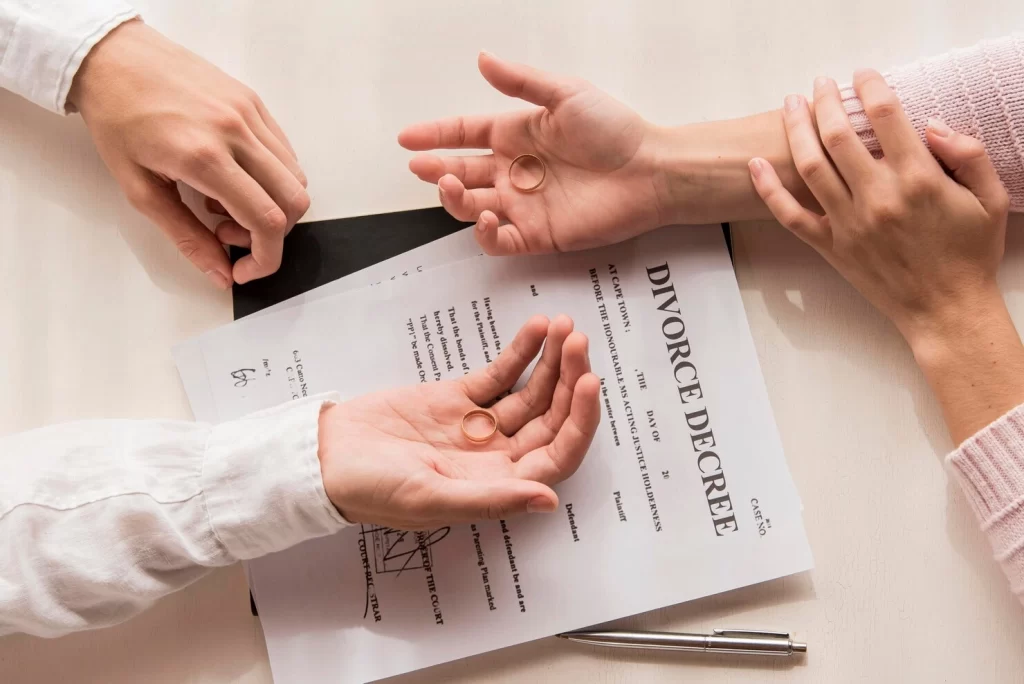


What happens when both spouses initially agree that divorce is the right decision, but suddenly cannot agree on what happens next?
A disagreement over the house, parenting schedule, bank accounts, or support can quickly change the direction of a divorce. While every divorce is different, conflict over important issues can turn an otherwise cooperative process into a contested case.
At Daniel Ogbeide Law, we help individuals prepare for disputes involving property, custody, support, and other family law matters. Recognizing the warning signs early can give you more time to organize documents, understand your rights, and seek appropriate legal guidance.
Here are the most common signs a divorce is becoming contested and what you can do when those warning signs appear.
What Does It Mean When a Divorce Becomes Contested?
A divorce becomes contested when spouses cannot reach an agreement on one or more significant issues. The disagreement does not have to involve every part of the divorce. A single unresolved issue can require court involvement.
Common disputes include:
- Division of marital property and debts
- Child custody and visitation
- Child support
- Spousal support
- Ownership of a business
- Retirement and investment accounts
- The classification of separate and community property
- The terms of the final divorce order
Understanding this distinction is important because disagreement does not automatically mean the case will end in a trial. Negotiation or mediation may still resolve disputed matters. However, recognizing the signs a divorce is contested early can help you prepare appropriately.
1. Your Spouse Stops Cooperating
One of the earliest warning signs is a sudden change in communication.
Your spouse may stop responding to messages, refuse to provide requested information, repeatedly postpone discussions, or decline to review proposed agreements. Occasional delays are not necessarily significant, but a consistent refusal to participate can indicate that reaching an agreement will become difficult.
Pay attention when ordinary discussions about the divorce become increasingly difficult or impossible.
2. Every Major Issue Becomes a Disagreement

Another warning sign is when seemingly every important decision becomes a point of conflict.
For example, you may agree that the marriage should end but disagree about:
- Who remains in the family home
- How property should be divided
- Where the children will spend their time
- Who makes important decisions for the children
- Whether support should be paid
- How debts should be allocated
When several major issues remain unresolved, the likelihood of a contested proceeding increases.
3. Your Spouse Refuses to Discuss Financial Information
Financial transparency is particularly important when significant assets or debts are involved.
If your spouse refuses to provide bank statements, tax records, retirement account information, business records, investment information, or other relevant financial documents, take the situation seriously.
This does not necessarily prove that assets are being hidden. However, refusing to exchange financial information can make settlement more difficult and may require formal legal procedures to obtain the information needed to evaluate the marital estate.
For people with substantial assets, business interests, or complicated finances, early preparation can be especially important. A high asset divorce lawyer in Houston may need to examine the nature, ownership, value, and classification of different assets before meaningful negotiations can take place.
4. Your Spouse Makes Demands Instead of Proposals
There is a significant difference between saying, “Here is what I think would be fair,” and saying, “This is what I am taking, and you have no choice.”
Rigid demands can be a warning sign that compromise will be difficult.
This may happen with property, parenting arrangements, support, or financial accounts. If your spouse rejects reasonable alternatives without discussion, the divorce may be moving away from cooperative resolution.
5. Child Custody Becomes a Source of Conflict
Disagreements involving children can quickly increase the seriousness of a divorce dispute.
Warning signs may include arguments over:
- Where the child should live
- Parenting time
- School decisions
- Medical decisions
- Travel
- Communication between parents
- Holiday and vacation schedules
Parents should avoid using children as messengers or asking them to take sides. Keep communication focused on the children’s needs and maintain records of significant communications and parenting issues.
When custody becomes a major point of disagreement, speaking with divorce lawyers in Houston before making major decisions can help you understand the legal implications of your actions.
6. Your Spouse Threatens to “Fight Everything”
Statements such as “I’ll fight you on everything” should not automatically be dismissed as emotional reactions.
Sometimes people say things during heated conversations that they later reconsider. But repeated threats to litigate every issue can signal that your spouse is preparing for a highly disputed case.
If this pattern continues, begin organizing your records and communicating carefully. Avoid sending angry messages, making threats, or posting about your divorce online. Anything you put in writing may later become relevant to the dispute.

When Early Preparation Can Change the Course of Your Case
Could recognizing the warning signs early make a difference in how you approach your divorce?
The answer depends on the circumstances of your case, but preparation can help you respond to conflict with information rather than emotion. A contested divorce may involve discovery, hearings, negotiations, mediation, and potentially trial. The sooner you understand the issues involved, the better positioned you may be to make informed decisions.
At Daniel Ogbeide Law, we represent individuals dealing with contested and complex family law matters. As a divorce law firm in Houston, we focus on family law and litigation, including disputes involving property, custody, support, business interests, and other significant issues. Our attorneys prepare cases with the possibility of courtroom litigation in mind while remaining open to negotiation and mediation when those methods serve the client’s interests.
If you are seeing several of these warning signs, contacting our contested divorce lawyers in Houston can help you understand what may come next and what steps you should consider taking now. We can review the circumstances of your case, help identify the issues creating conflict, and provide legal representation designed around the facts of your situation.
Do not wait for a disagreement to become a full legal battle before seeking advice. Contact Daniel Ogbeide Law to schedule a consultation with a family law attorney and begin preparing for the next stage of your divorce.