
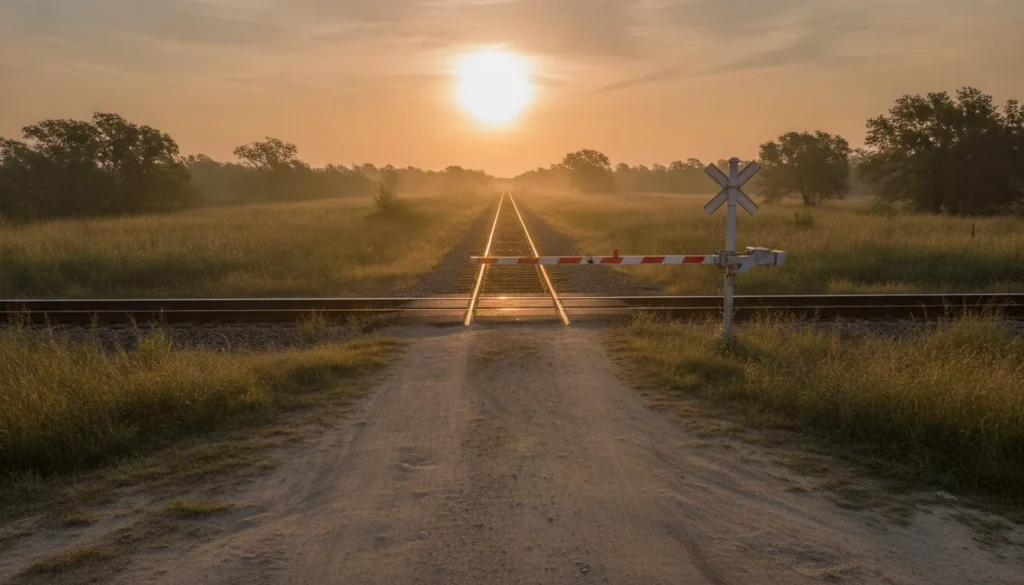
A collision with a train is sudden, loud, and hard to piece together afterward. If you were hurt at a Houston crossing, platform, or rail site, a train accident lawyer Houston residents call can help sort medical care, records, and witness names before those details fade. This guide explains what to preserve. It does not predict what a claim is worth or who will be found responsible.
Call (832) 321-7005 to discuss your train accident claim
What a train accident lawyer in Houston reviews first
The first conversation is about facts, not a promised result. Counsel looks at where the collision happened, who was hurt, what treatment has started, and which papers already exist. Daniel Ogbeide Law is a Houston firm that also handles personal injury matters. The Houston personal injury practice is the broader home for injury work. A train collision needs its own set of records.
Bring what you have, even if it is incomplete. A useful first packet often includes:
- The date, time, and closest cross streets or crossing number.
- Names of railroads, transit agencies, or other vehicles involved, if you know them.
- Hospital or clinic paperwork from the first visit.
- Photos of the scene, vehicle, clothing, or visible injuries.
- Names and phone numbers for people who saw the collision.
A consultation is complimentary and can be by phone or in person. Document review and advice about your specific case come only after you formally hire the firm. You do not have to retain the firm to ask an initial question.
Get medical care and keep the treatment record
Get checked by a doctor or an emergency department, even if you feel able to walk away. Train collisions can cause injuries that are not obvious in the first hour. Adrenaline can hide pain. A same-day note creates a dated record of what hurt and what a clinician observed.
Follow the care plan you are given. If you miss visits, write down why. Transportation trouble, work shifts, and child care are real reasons, and they belong in your notes. Do not guess at a diagnosis or add symptoms you do not have. Counsel can only work with what the records actually say.
Organize care in date order. A simple list is enough:
- First treatment location, date, and the main complaint you reported.
- Follow-up visits, imaging, and prescriptions.
- Work or school days missed, with dates.
- Out-of-pocket costs, mileage, and who drove you.
- Any later change in symptoms, in your own words.
Keep bills and explanation-of-benefits letters with that list. Do not promise yourself, or anyone else, that every bill will be paid through a claim. Whether a loss can be pursued depends on the facts, the records, and the law that applies.
Write down the incident while the details are fresh
Memory gets less reliable after a frightening event. Sit down within a day, if you can, and write a plain account. Use short sentences. Separate what you saw from what someone told you later.
Include the direction you or the train were traveling, the weather, lighting, and whether gates, lights, or bells were operating. Note if you stopped, slowed, or were already on the tracks. If you were a passenger or a bystander, say where you stood and what you could actually see.
Add a sketch if words are hard. Mark north if you know it. Label the train, your vehicle or position, and nearby buildings. A rough drawing is more useful than a polished one made from guesses.
Save texts, emails, and social posts about the collision, including your own. Do not delete them to tidy your phone. Also save the names of tow companies, ambulance services, and any officer or railroad employee who spoke with you. A badge number or truck number is helpful. A description is still useful if you missed the number.
Witnesses, photos, and crossing details
A witness who is not a party may provide another account, although counsel will still assess what the person saw and whether the account is consistent with other records. Ask for a name and a working phone number. A bystander at a Houston crossing may leave in minutes. If you are injured, ask a family member to collect contacts while you get care.
Photos should show the wider scene before they show close-ups. Capture the crossing, the tracks in both directions, signs, gates, and the position of vehicles. Then photograph damage, debris, and your injuries. Turn on location and time stamps if your phone allows it. Do not walk onto active tracks to get a better angle.
If you can do it safely from public property, note:
- Street names and any posted crossing number.
- Whether lights flashed, gates lowered, or bells sounded.
- Traffic queued behind you, and whether a second train was nearby.
- Construction, parked trucks, or vegetation that blocked a view.
- Weather, glare, and the time shown on your phone.
These details help counsel ask the right questions. They do not, by themselves, prove that a railroad, a driver, or a public agency was at fault.
Which records may exist after a Houston train collision
Train collisions create different paper trails than a typical car crash. A railroad may have event-recorder data, crew reports, and radio communications. A highway-rail crossing may appear in the Federal Railroad Administration’s crossing inventory. Police or sheriff’s offices may have a crash report. Hospitals have the medical chart. You will not hold all of those files on day one, and some may require a formal request.
The Federal Railroad Administration publishes railroad safety data, including accident, incident, and highway-rail crossing information, through its safety data query by state. Railroads also use FRA Form F 6180.54, the Rail Equipment Accident/Incident report, for certain rail equipment accidents. That form is a railroad reporting tool. It is not a substitute for your own notes, and it may not cover every injury at a crossing or platform.
| Record | Who may have it | Why counsel may ask |
|---|---|---|
| Emergency and follow-up medical chart. | Hospital, clinic, or imaging center. | Shows timing of complaints and treatment. |
| Police or crash report. | Local law enforcement. | Lists people, vehicles, and a first narrative. |
| Your photos, sketch, and written account. | You and your family. | Preserves scene details that can disappear. |
| Witness names and numbers. | You, if collected at the scene. | Gives a path to people who are not parties. |
| Crossing inventory or railroad reports. | FRA databases or the railroad. | May describe the crossing or reported rail events. |
| Wage and bill records. | Employer, insurer, and providers. | Documents time off work and charges incurred. |
Do not assume a public database names your collision or assigns blame. Use it as a place to look, then let counsel compare it with your account and the medical chart.
Who may hold information, and what that does not decide
A Houston train collision can involve more than one possible source of information. The railroad that operated the train, a track owner, a public agency that maintains the road, another driver, or a contractor working near the tracks may each have records. Which of them, if any, can be pursued is a legal question. It depends on the facts and on deadlines.
Texas law sets time limits for personal injury lawsuits. Under Texas Civil Practice and Remedies Code section 16.003, a personal injury suit generally must be brought within two years of the day the claim accrues. A suit for injury resulting in death generally follows that same two-year period, measured from the death. The official text is on the Texas Constitution and Statutes site. Some claims have different rules, including claims involving a government entity. Do not count the days yourself and assume you are safe. Ask counsel to check the deadline that fits your facts.
For a wider look at what happens after other kinds of injuries, read what to expect after an injury. That article is general. It does not replace the crossing photos, railroad identifiers, and witness list described here. If your matter is a workplace injury at an oilfield rather than a train collision, start with the oilfield injury steps instead.
How to prepare for a consultation
A prepared consultation saves time and reduces the chance that an important detail is missed. You do not need a perfect file. You need an honest one.
Before you call or come in, gather:
- Photo identification and the best phone number and email for you.
- Your written account and sketch, plus photos on your phone or a drive.
- Medical discharge papers and a list of providers.
- Health insurance cards and any letters from insurers.
- Employer contact information if you missed work.
- A short list of questions you want answered.
Be ready to explain gaps. If you do not know the railroad’s name, say so. If a family member took the photos, say who. If another lawyer already has some papers, bring that lawyer’s name. Switching or ending a representation has its own steps, and the firm can explain those only after it understands the current status.
Personal injury matters at this firm may be handled on a contingency fee, which means no upfront legal fee. The firm does not publish a percentage or an expense policy on this page. Any fee agreement is explained in writing if you decide to hire the firm. That arrangement is for personal injury. It does not apply to family law or immigration matters.
The firm cannot promise compensation, a settlement, or a court outcome. A consultation is a chance to learn what information is missing and whether the firm can help you collect it.
What to avoid while the facts are still being collected
Small choices in the first weeks can make a later review harder. You do not need to stay silent with your family. You should be careful about public statements and recorded conversations.
Avoid these common problems:
- Do not give a recorded statement to an insurer or railroad representative until you understand what is being asked.
- Do not sign a broad medical release you have not read.
- Do not post about fault, speed, or injuries on social media.
- Do not repair or discard damaged property before photographing it.
- Do not guess about warning devices if you were not in a position to see or hear them.
You may speak with your own doctors and follow their instructions. You may also talk with counsel. Those conversations are different from a statement given to someone whose job is to evaluate a claim for a company.
If pain changes, go back to a clinician and say what changed. Do not wait for a legal appointment to get care. Health comes first. The chart then gives counsel a clearer timeline.
A practical timeline for the first month
Every collision is different. This timeline is a planning aid, not a rule about how strong a claim is.
| When | Focus | What “done” looks like |
|---|---|---|
| Same day. | Safety and medical care. | You are examined, and a family member has your phone and photos. |
| Days 1 to 3. | Memory and witnesses. | A written account, a sketch, and contact names are saved. |
| First two weeks. | Treatment and work impact. | Follow-up visits are booked and missed work is listed by date. |
| First month. | Counsel review. | You have asked which records are missing and which deadlines may apply. |
Houston crossings sit inside a large freight and passenger rail network. Street names, mileposts, and railroad subdivisions are easy to mix up. If you only remember a landmark, write that down. A store, a school, or a bayou crossing can help someone else find the site later.
Parents and adult children often coordinate this work. Agree on one person to keep the folder so the same photo is not saved under three different names and a witness number is not lost in a group text. Share the folder with counsel when you are ready. Do not edit photos to make damage look worse. Original files are more credible than filtered copies.
Frequently Asked Questions
Can you sue after being hit by a train in Houston?
Sometimes a civil claim is possible, and sometimes it is not. It depends on what happened, who may be responsible, and whether a deadline has passed. A train accident lawyer in Houston can review those facts. No page can tell you that you have a case.
What if you did not get the locomotive number?
Write down the time, place, direction of travel, and what the equipment looked like. Photos, a police report, or railroad records may still identify the train. An incomplete memory is normal. Do not invent a number.
Should you talk to the railroad’s insurance company?
You can report that you were hurt and ask for a claim number. Be cautious about a recorded statement or a medical release before you understand the request. You may bring those papers to a consultation and ask what they mean.
Does a police report decide fault?
No. A report is one early account. It can list names, locations, and statements. It does not decide a lawsuit, and it may omit crossing equipment or railroad data that counsel later requests.
How fast do you need to call a lawyer?
Sooner is better for preserving witnesses and scene details, but emergency care comes first. Texas personal injury suits are often subject to a two-year deadline under Civil Practice and Remedies Code section 16.003, with important exceptions. Ask about the deadline that applies to you.
If you were hurt in a train collision in Houston, call Daniel Ogbeide Law at 832-321-7005 or request a complimentary consultation. The firm will listen to what happened and explain what records may help. There is no obligation to retain the firm, and no outcome is promised.