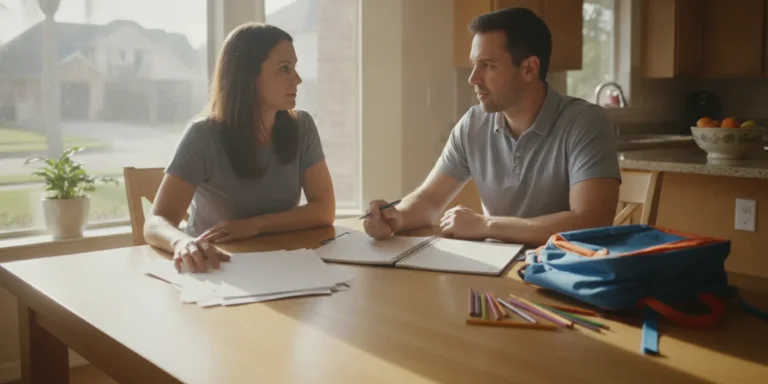




In a Texas custody mediation, a frustrated comment can pull the talk away from the parenting problem you came to solve. Threats, insults, and lines about winning can make it harder to stay on what your child needs that week.
Talk with a Houston custody lawyer before mediation
Knowing what not to say in child custody mediation does not guarantee a custody order or a parenting schedule. Skip insults, threats, unsupported accusations, and absolute demands, and explain concerns in specific, child-focused terms. Texas law puts the child’s best interest at the center of conservatorship and possession decisions, but a mediator does not decide your case or represent either parent.
You do not have to accept every proposal, and you should not stay quiet about a real safety concern. Choose precise words, ask questions before you react, and get advice about your own facts before you sign. What you say can shape the written terms that follow, so it helps to know which comments tend to stick.
Why words in custody mediation can follow you
A comment in the room is not automatically a court order. It can still shape the proposals that come next, especially if it sounds like a parent will not support the child’s routine. Before you answer, stay on practical arrangements: school nights, exchanges, and what each parent can actually do.
Texas law makes the child’s best interest the court’s main concern in conservatorship and possession matters. Public policy favors three things. Parents who can act in the child’s interest should have frequent, continuing contact. The home should be safe, stable, and nonviolent. After a separation, parents should share the rights and duties of raising their child. Those ideas help you choose what to propose. The wording is in Texas Family Code Sections 153.001 and 153.002.
A spoken idea is not the same as a signed agreement
A proposal is not an agreement. A spoken line does not become an order by itself. A written mediated settlement agreement is different.
Texas Family Code Section 153.0071(d) and (e) sets three marks. The paper must say, in bold, capitals, or underline, that it is not subject to revocation. Each party must sign. A party’s attorney who is present at signing must sign too. Meet those marks and the agreement is binding. A party is then entitled to judgment on it. Read the page before you sign. Ask about any sentence you do not understand.
That is one reason parents look for help preparing for family law mediation. The mediator does not represent either parent and does not decide the case. Daniel Ogbeide Law represents the parent. If you retain the firm, your lawyer can help you look at a proposed schedule without promising a result.
If family violence affects whether you can decide freely, slow down. Texas law covers some of those situations, including a written objection to a mediation referral and safety measures if the court still sends the case. Saying less, or agreeing just to get out of the room, is not a safety plan. Get advice about your facts before you sign.
What not to say in child custody mediation
Mediation is a talk about a workable plan for your child, not a chance to punish the other parent. Careful wording does not win conservatorship or a set schedule. It does keep the conversation on the child’s week instead of the fight. Houston parents often want legal guidance before mediation so they are not inventing that plan in the hallway.
Lines and approaches that usually make the session worse:
- Do not say “You are a terrible parent.” An insult about character is not a plan.
- Do not say “You will never see the kids again.” A threat to withhold the child or parenting time shuts the talk down.
- Do not say “Tell your mom she has to pay me.” Do not use the child to carry messages.
- Do not say “The kids will choose me.” That puts an adult decision on the child.
- Do not say “You will never see the kids unless I say so.”
- Do not say “I will ignore the schedule whenever I want.” An unfair draft is a reason to revise it. It is not a reason to announce you will break it.
- Do not say “You can have more time if you drop support.” That treats the child as a trade.
- Do not say “I want to win and make you pay.” Punishment is not a parenting proposal.
Child support and possession are separate. Texas Family Code Section 153.001(b) says a court may not condition a parent’s possession of or access to a child on payment of child support. Do not use that rule as a threat. Ask your lawyer how support and parenting time should be discussed in your case.
Safety is different from a tactic. Do not exaggerate, repeat a rumor, or make a serious claim you cannot support. If there was violence, substance use, neglect, or another real safety problem, say what happened and when, and give your lawyer the records you have. Do not soften a true safety fact just to keep the tone pleasant.
Swap the attack for a concrete request. Try “I want exchanges at the same place.” Or “Our child needs a school-night bedtime.” Or “We both need school notices.” Talk about age, school, relationships, the daily schedule, and safe handoffs. Texas public policy also points to a safe, stable, nonviolent home. It asks parents to share the work of raising a child after separation. The statute text is in the Texas Family Code.
Daniel Ogbeide Law represents parents in these talks. The firm is not the neutral mediator and does not decide the case. A Houston parent who wants custody case guidance can go over the situation before deciding how to walk into the session.
What to say instead about the child
The session stalls when a parent feels attacked. Stay on what the child needs and on a plan both adults can follow. The swaps below are examples, not scripts that fit every family.
| Instead of this | Try this | Why it helps the conversation |
|---|---|---|
| Do not say “You are a terrible parent.” | Say you want to talk about the care your child needs. | It names the parenting issue without a personal attack. |
| Do not say “You will not see the child if you do that.” | Say you are worried about what happened and ask how parenting time should work while you address it. | It raises the concern without using time with the child as a threat. |
| Do not say “The child will choose where to live.” | Say the child’s needs, and age-appropriate views, belong in the picture with the other facts. | Adults keep the decision. The child is not the referee. |
| Do not say “I will not follow any schedule.” | Say the draft misses school and bedtime, and ask for one you can both keep. | It points at a practical problem and asks for a fix. |
| Do not say “You can have more time if you pay me more.” | Say money and parenting time should be handled as separate issues. | Time with a child is not a chip to trade. |
When you describe what your child needs, be specific. Talk about age, physical and emotional health, relationships with each parent and with siblings, and the need for a stable home. You can also describe how the child is doing at home, at school, and in the community, and what each parent wants. The Houston custody page lists those points for parents to think about. They are not a complete statute list, and they do not predict an order.
Then move from the worry to details a plan can hold: the weekly schedule, the exchange, and who decides school and medical questions. Read more about what a Texas parenting plan should cover. If you need help looking at conservatorship or a possession schedule, Daniel Ogbeide Law offers Houston child custody help for conservatorship and possession schedules and represents parents at mediation. The first consultation is complimentary, by phone or in person, with no obligation to retain the firm. Document review comes only after you engage.
Before you sign or keep talking
A hard session can make signing feel like the way out. It may not be. Do not sign a mediated settlement agreement just to end an uncomfortable talk. Stop long enough to see what the paper changes and whether anyone has explained it to you.
Ask whether the draft has the prominent statement in Texas Family Code Section 153.0071. That statement says the agreement is not subject to revocation. It must be in bold, capitals, or underline. Ask whether your attorney is in the room and will sign. Those pieces, plus each party’s signature, make the agreement binding. They also entitle a party to judgment on it. The mediator still does not represent you. Have your own lawyer explain the page before you sign.
Say the safety problem before the session moves on
If family violence, threats, or coercion affected whether you could decide, say that before the talk continues. Section 153.0071(e-1) is narrow. A court may decline to enter judgment in two situations, and only if the agreement is also not in the child’s best interest. One is a finding that family violence impaired a party’s ability to decide. The other is an agreement that would let a person with a specified history of physical or sexual abuse live with the child or have unsupervised access. That is not a forecast of what a judge will do in your case.
Before the final mediation order, a party may file a written objection. The basis is family violence against that party or the child. After the objection, the suit is not referred unless a hearing finds the objection unsupported. The test is a preponderance of the evidence. If the court still refers the case, it must order safety measures. Those measures cover the objecting party’s physical and emotional safety. Do not assume you can refuse a court referral on your own. If you are in immediate danger, contact emergency services.
For custody case guidance, Daniel Ogbeide Law can talk through options in a complimentary consultation by phone or in person. There is no obligation to retain the firm. Document review and case-specific analysis happen only after formal engagement. Call 832-321-7005. Reaching out is not a promise that everything you share on that first call is privileged.
Frequently asked questions
What should you avoid saying in child custody mediation?
Avoid threats, personal attacks, unsupported accusations, and absolutes such as “You will never see our child again.” Those lines pull the talk off a workable plan. Describe the specific concern, how it affects the child, and the practical request you want considered. Careful wording does not guarantee custody or a schedule.
What should you say when you disagree with a proposed parenting schedule?
Name the concrete problem and offer another option you can keep. School transportation, exchanges, work hours, medical care, and how the child is doing at home and in the community are useful details. Stay on the child’s needs instead of trying to prove the other parent is a bad person. Ask your lawyer to review any sentence you do not understand before you agree.
Can something I say in mediation become a court order?
A spoken comment does not become an order by itself. Do not treat the discussion as casual anyway. Under Texas Family Code Section 153.0071(d) and (e), a written mediated settlement agreement can be binding when it has the required non-revocation statement and the required signatures. A party can then be entitled to judgment on it. Read the written terms before you sign.
What if family violence or coercion is part of the mediation?
Tell your lawyer, and tell the mediator, before you agree to keep going. Do not hide threats so you look cooperative, and do not assume you can simply refuse a referral. Texas Family Code Section 153.0071 covers a written objection and, in narrow situations, a court’s choice not to enter judgment. Get advice about your facts. If you are in immediate danger, contact emergency services.
Talk through the mediation before you sign
A custody mediation may already be on your calendar. Daniel Ogbeide Law can walk through your options in a complimentary consultation by phone or in person. There is no obligation to retain the firm. Document review happens only after you engage. Call 832-321-7005 or request a consultation.