
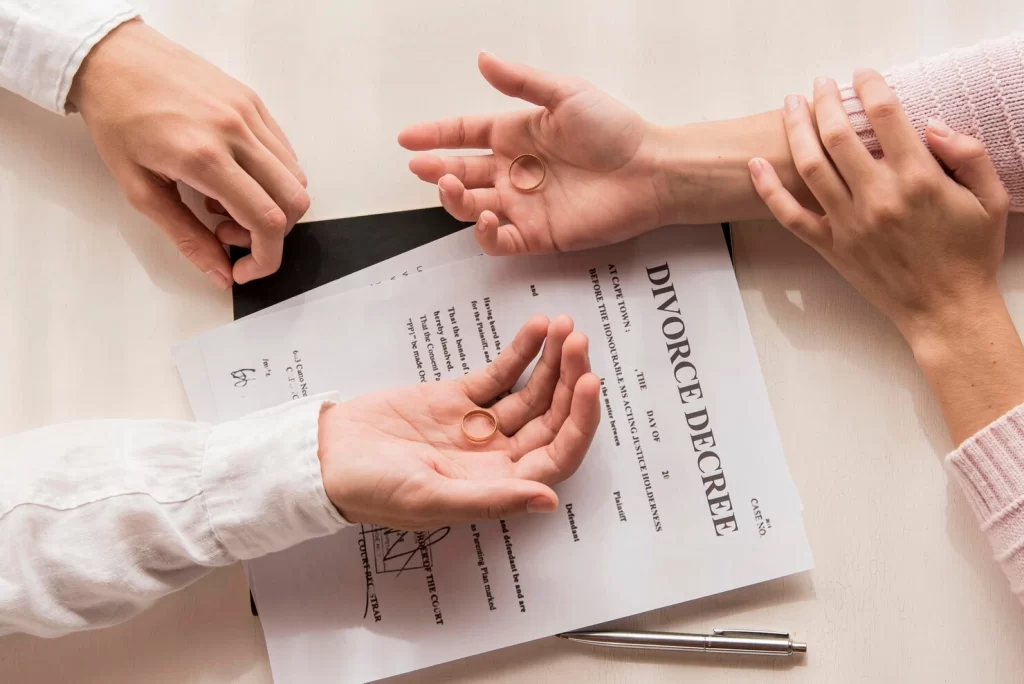



What happens when two people decide to end a marriage but cannot agree on how to do it?
For many couples, divorce is not a simple or cooperative process. Studies show that a significant percentage of divorces involve disagreements over property, finances, or child-related matters. When those disagreements cannot be resolved through negotiation, the case becomes contested, and the legal process becomes far more involved. The emotional and financial pressure can increase quickly, especially when key issues remain unresolved.
We understand how overwhelming this can feel. At Daniel Ogbeide Law, we work with individuals facing complex disputes and help them move through difficult situations with clarity and direction. Whether the disagreement involves property division, child custody, or financial support, having the right legal guidance can make a meaningful difference.
In this article, we explain what makes a contested divorce case, how disputes affect the process, and what you can expect as your case moves through the court system.
What Is a Contested Divorce Case?
A contested divorce case arises when spouses cannot agree on one or more essential aspects of ending their marriage. Unlike an uncontested divorce, where both parties are in agreement on all major issues, a contested matter requires court involvement to resolve disputes.
Common Issues That Lead to Contested Divorce
Disagreements may arise in several areas, including:
- Division of marital property
- Child custody and visitation schedules
- Child support obligations
- Spousal support or maintenance
- Responsibility for debts
- Business ownership or valuation
Even one unresolved issue can turn a case into a contested divorce. In many situations, multiple disputes occur at the same time, increasing the complexity of the proceedings.
Why Contested Divorces Are More Complex
When spouses cannot reach agreements, the court must step in to make decisions based on the evidence presented. This often involves:
- Formal legal filings
- Discovery procedures
- Court hearings
- Possible trial proceedings
Each stage requires preparation, documentation, and strategic decision-making. This is why many individuals turn to experienced contested divorce lawyers to guide them through the process.

Key Differences Between Contested and Uncontested Divorce
Understanding the difference between these two types of divorce is essential because it directly affects how a case progresses, how long it may take, and what level of legal involvement is required. While both processes ultimately lead to the legal end of a marriage, the path taken in each is very different.
Uncontested Divorce: A More Streamlined Process
An uncontested divorce occurs when both spouses reach a full agreement on all major issues before involving the court in any significant way. This includes agreement on property division, child custody, child support, and spousal support.
What Full Agreement Really Means
In practical terms, this means:
- Both parties agree on how assets and debts will be divided
- There is a clear, mutually accepted parenting plan if children are involved
- Financial support obligations are determined and accepted by both sides
- No unresolved disputes remain that require a judge’s decision
Even minor disagreements can prevent a divorce from being classified as uncontested. The key factor is that there is nothing left for the court to decide.
Court Involvement Is Limited
In an uncontested case, the court’s role is largely administrative. A judge reviews the agreement to ensure it complies with legal standards and is not unfair to either party or any children involved.
Typically, this process involves:
- Filing agreed documents with the court
- Attending a brief hearing, if required
- Receiving a final divorce decree once the paperwork is approved
Because there are no disputes to resolve, the court does not need to conduct hearings on contested issues or evaluate competing evidence.
Faster Resolution
Uncontested divorces are generally resolved much more quickly than contested ones. Without the need for discovery, multiple hearings, or trial preparation, the process can move forward efficiently.
However, timelines can still vary depending on:
- Court schedules
- Waiting periods required by law
- How quickly paperwork is completed and filed correctly
Even so, uncontested cases are almost always shorter than a contested divorce case.
Lower Emotional Strain
While any divorce carries emotional weight, uncontested cases tend to involve less conflict. Cooperation between spouses can reduce tension and make communication more manageable, especially when children are involved.
That said, reaching agreement is not always easy. It often requires compromise, clear communication, and sometimes legal guidance to ensure the agreement is fair and enforceable.
Contested Divorce: A More Involved Legal Process

A contested divorce case arises when spouses cannot agree on one or more important issues. This lack of agreement shifts decision-making authority to the court and introduces multiple legal stages.
Disagreements Can Vary in Scope
Not all contested cases are the same. Some involve a single unresolved issue, while others involve multiple areas of dispute.
Common points of disagreement include:
- Division of significant assets or debts
- Custody and visitation arrangements
- Child support calculations
- Spousal support requests
- Business ownership or valuation
Even one unresolved issue can require court intervention, turning the matter into a contested divorce case.
Court Intervention Becomes Necessary
In a contested case, the court plays an active role in resolving disputes. Judges evaluate evidence, hear arguments, and make decisions that both parties must follow.
This process often includes:
- Temporary orders hearings
- Discovery procedures
- Pre-trial motions
- Settlement conferences or mediation
- Trial, if no agreement is reached
Each of these stages requires preparation and legal strategy, which increases the complexity of the case.
Longer Timeline
A contested divorce case typically takes more time to resolve. The exact duration depends on several factors, such as:
- The number of issues in dispute
- The willingness of both parties to negotiate
- The availability of the court
- The complexity of financial or custody matters
Some cases may resolve within several months, while others can extend well beyond a year. Delays may occur if additional evidence is needed or if court schedules are congested.
Higher Level of Legal Involvement
Contested cases require a more structured legal approach. This includes gathering evidence, responding to filings, and presenting arguments in court.
Legal involvement may include:
- Drafting and responding to formal pleadings
- Conducting discovery to obtain financial and personal information
- Preparing witnesses and expert testimony
- Representing clients during hearings and trial
Because of these demands, individuals often rely on family court lawyers in Houston, TX, or similar legal professionals who have experience handling contested divorce cases.
The Legal Process in a Contested Divorce Case

A contested divorce does not happen all at once. It unfolds through several stages, each of which plays a role in shaping the final outcome.
1. Filing the Petition
The process begins when one spouse files a petition for divorce with the court. This document outlines the basis for the divorce and identifies the issues in dispute.
The other spouse must then file a response, which may include:
- Agreement with some claims
- Disagreement with others
- Counterclaims
At this stage, the case is officially recognized as contested if disagreements are present.
2. Temporary Orders
In many contested divorce cases, immediate decisions must be made while the case is ongoing. Courts may issue temporary orders to address:
- Child custody arrangements
- Temporary child support
- Spousal support
- Use of marital property
- Payment of bills
These orders remain in place until the final judgment is issued. Temporary hearings can be one of the first opportunities for both parties to present their positions in court.
3. Discovery Phase
The discovery phase is one of the most important stages in a contested divorce case. During this period, both parties gather information and evidence to support their claims.
Common Discovery Tools
- Interrogatories: Written questions that must be answered under oath
- Requests for production: Documents such as bank statements, tax returns, and financial records
- Depositions: Sworn testimony taken outside of court
- Subpoenas: Requests for information from third parties
This phase is especially significant in cases involving substantial assets or business interests, where a high-asset divorce lawyer may be involved.
4. Negotiation and Mediation
Even in a contested divorce, not all issues necessarily go to trial. Courts often encourage parties to attempt resolution through mediation.
Benefits of Mediation
- More control over outcomes
- Reduced conflict
- Faster resolution
- Lower emotional stress
During mediation, a neutral third party helps both sides work toward agreements. If successful, some or all issues may be resolved without further litigation.
5. Pre-Trial Motions and Hearings
Before trial, attorneys may file motions to address specific issues, such as:
- Requests to exclude evidence
- Enforcement of discovery obligations
- Clarification of legal questions
These hearings help narrow the issues that will ultimately be decided at trial.
6. Trial
If disputes remain unresolved, the contested divorce case proceeds to trial. This is where both parties present their arguments before a judge.
What Happens During Trial
- Opening statements from both sides
- Presentation of evidence
- Witness testimony
- Cross-examination
- Closing arguments
The judge then reviews the evidence and issues a final decision.
This stage often requires the support of experienced family court lawyers who are comfortable presenting cases in a courtroom setting.
7. Final Judgment
After trial, the court issues a final decree of divorce. This document includes decisions on all contested issues, such as:
- Property division
- Custody arrangements
- Support obligations
Once finalized, both parties must comply with the court’s orders.
How Property Disputes Affect the Case

Property division is one of the most common reasons a divorce becomes contested. Disagreements may arise over:
- Family homes
- Investment accounts
- Retirement funds
- Business ownership
- Personal property
Community Property Considerations
In many cases, courts divide marital property based on principles of fairness. However, determining what is considered marital versus separate property can lead to disputes.
High-Asset Divorce Challenges
When significant assets are involved, the process becomes more complex. A high-asset divorce lawyer may be needed to address:
- Valuation of businesses
- Hidden assets
- Tax implications
- Division of complex investments
These cases often require financial experts and detailed documentation.
Child Custody and Parenting Disputes
Few issues carry as much emotional weight as child custody. In a contested divorce case, disagreements may involve:
- Primary residence of the child
- Visitation schedules
- Decision-making authority
Factors Courts Consider
Courts focus on the best interests of the child. Factors may include:
- Each parent’s ability to provide stability
- The child’s relationship with each parent
- Educational and emotional needs
- Any history of conflict or misconduct
Impact on the Case
Custody disputes can significantly extend the timeline of a contested divorce. Courts may require:
- Custody evaluations
- Psychological assessments
- Testimony from professionals
Because of the stakes involved, many individuals seek guidance from family law and litigation attorneys when dealing with custody matters.
Financial Support Disputes
Disagreements over financial support are another major factor in contested divorce cases.
Types of Support
- Child support: Payments for the child’s needs
- Spousal support: Financial assistance for a spouse
What Courts Evaluate
- Income of both parties
- Employment history
- Standard of living during marriage
- Financial needs and obligations
Accurate financial records are essential during this stage.
The Role of Evidence in a Contested Divorce Case

Evidence plays a central role in determining the outcome of a contested divorce case. Courts rely on documentation and testimony to make informed decisions.
Types of Evidence
- Financial records
- Communication records
- Witness statements
- Expert testimony
Importance of Preparation
Proper preparation ensures that relevant evidence is presented clearly and effectively. This is where working with experienced family law and litigation lawyers becomes especially important.
Appeals in Contested Divorce Cases
Not all cases end with the trial court’s decision. In some situations, one party may seek to challenge the outcome through an appeal.
When Appeals May Be Filed
- Legal errors during trial
- Misinterpretation of evidence
- Procedural issues
A family law appeals attorney can review the case and determine whether grounds for appeal exist.
Emotional and Practical Challenges
A contested divorce case is not only a legal process but also a personal one. Individuals often face:
- Emotional stress
- Financial uncertainty
- Changes in family structure
Managing the Process
Some helpful approaches include:
- Staying organized with documentation
- Following court orders carefully
- Maintaining clear communication with legal counsel
- Focusing on long-term outcomes rather than short-term conflict
How Long Does a Contested Divorce Take?
The timeline varies depending on the complexity of the case.
Factors That Affect Duration
- Number of disputed issues
- Level of cooperation between parties
- Court schedules
- Complexity of assets
Some contested divorce cases may take several months, while others can extend beyond a year.
When Common-Law Marriage Issues Are Involved
In certain situations, disputes may arise over whether a marriage legally exists. This is particularly relevant in cases involving informal or common-law relationships.
A common-law divorce lawyer may assist in determining:
- Whether the relationship meets legal requirements
- How property and support issues should be handled
These cases often require additional evidence and legal analysis.
Why Legal Representation Matters

Handling a contested divorce case without legal support can be difficult, especially when multiple issues are involved.
Benefits of Legal Guidance
- Understanding legal procedures
- Preparing strong evidence
- Negotiating effectively
- Representing your interests in court
Working with a divorce law firm that has experience in contested matters can help ensure that your case is handled with attention to detail and strategic planning.
Frequently Asked Questions
- What makes a divorce contested?
A divorce becomes contested when spouses cannot agree on one or more key issues, such as property division, custody, or financial support. Court intervention is required to resolve these disputes.
- Can a contested divorce become uncontested later?
Yes, if both parties reach agreements during the process, the case may shift toward resolution without trial. Mediation often helps facilitate this outcome.
- Do all contested divorce cases go to trial?
No, many cases are resolved through negotiation or mediation before reaching trial. However, if disputes remain, a judge will make the final decision.
- How can I prepare for a contested divorce?
Preparation may include gathering financial documents, keeping records of communications, and working closely with legal counsel to build a strong case.
- What role does a lawyer play in a contested divorce?
A lawyer helps manage the legal process, prepares evidence, negotiates on your behalf, and represents you in court if necessary.

Moving Forward With Clarity and Confidence
What does it take to move through a contested divorce and come out with a fair resolution?
A contested divorce case requires preparation, patience, and informed decision-making. From the initial filing to the final judgment, every stage presents its own challenges. Disputes over property, custody, and financial support can shape the outcome in lasting ways.
We understand that no two cases are the same. At Daniel Ogbeide Law, we provide guidance for individuals dealing with contested divorce cases in Houston and surrounding areas. As a divorce law firm with experience in complex matters, we work to protect our clients’ interests while helping them make informed decisions at every step. Whether you need a contested divorce attorney, assistance with high-asset disputes, or representation in family court, we are here to help.
If you are facing a contested divorce and need direction, we encourage you to reach out to our team. Speaking with a family lawyer in Houston can help you better understand your options and take the next step with confidence.