
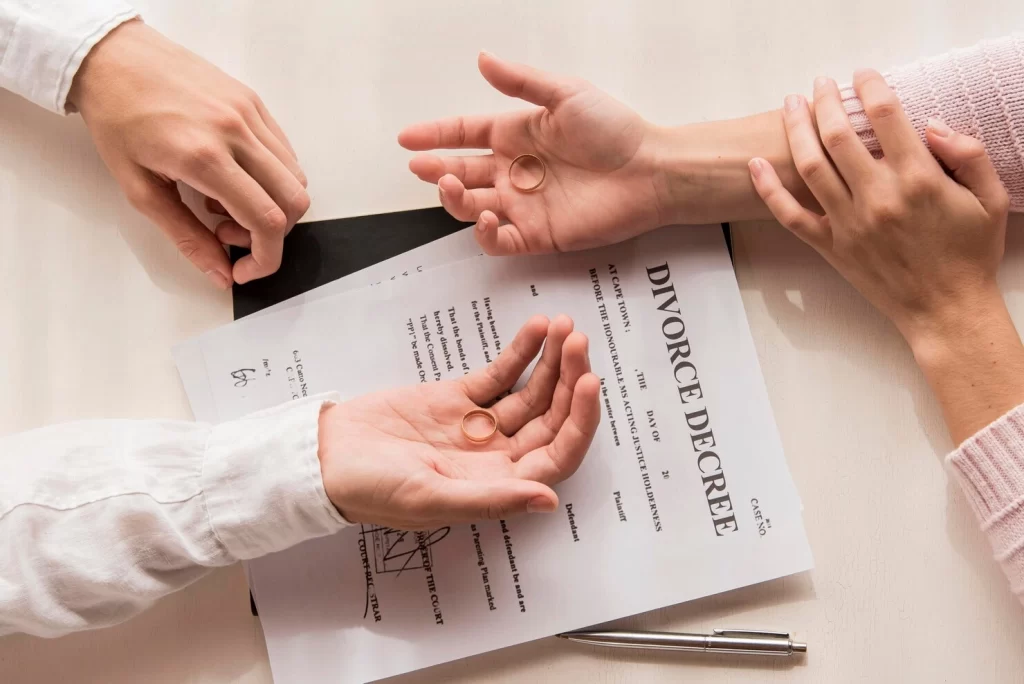



What happens when every conversation about divorce ends with a disagreement? You want the house sold, your spouse wants to keep it. You propose a parenting schedule, they reject it. You ask for financial records, and the response is another dispute. When spouses cannot agree on divorce terms, what began as a difficult personal decision can become a contested legal matter.
When agreement breaks down, legal representation becomes especially important.. When agreement breaks down, legal representation becomes especially important. At Daniel Ogbeide Law, we help clients understand their rights, prepare their positions, and respond when negotiations fail.
This article explains what can happen when spouses disagree over property, finances, children, support, and other major divorce issues.
When Disagreement Turns a Divorce Into a Contested Case
Not every disagreement makes a divorce fully contested. Couples can disagree about one issue and resolve everything else through negotiation. However, when major terms remain disputed, the case may require court intervention.
Texas allows a divorce without requiring one spouse to prove fault when the marriage has become insupportable because of conflict or discord that prevents a reasonable expectation of reconciliation.
The important distinction is that ending the marriage and resolving the terms of the divorce are separate matters.
A spouse may agree that the marriage should end while disagreeing about:
- Division of marital property
- Responsibility for debts
- The marital home
- Retirement accounts and investments
- Business interests
- Spousal maintenance
- Child support
- Conservatorship
- Parenting time
- Education and medical decisions
- The child’s primary residence
If these disagreements cannot be resolved, the case may proceed as a contested divorce.
What Your Attorneys Do When Negotiations Fail
When a spouse cannot agree, their attorneys help identify the disputed issues, gather supporting evidence, and present each client’s position through the legal process..
A divorce attorney in Houston may begin by identifying precisely what remains disputed and what evidence supports each position. This can include financial records, communications, employment information, property records, business documents, and information concerning the children’s needs.

The work may involve:
- Gathering evidence
Attorneys collect documents and information needed to understand the marital estate, debts, income, parenting circumstances, and disputed issues. - Identifying legal positions
Each side determines what it is asking the court to order and why those requests are supported by the facts and applicable law. - Negotiating where possible
Even after a case becomes contested, settlement discussions can continue. Not every dispute has to reach a final hearing. - Preparing for court
If agreement remains impossible, attorneys prepare pleadings, evidence, witnesses, exhibits, and legal arguments for the court.
This is where experienced divorce lawyers can make a meaningful difference. Instead of allowing every disagreement to become a personal confrontation, the legal process gives each issue a defined place.
What Happens With Property and Financial Disputes?
Property disputes can become particularly difficult when spouses disagree about what should happen to major assets.
The disagreements may involve the family home, vehicles, bank accounts, retirement benefits, investments, or business interests. There may also be disagreement about debts and whether particular property is separate or part of the marital estate.
Financial disputes can become more demanding when records are incomplete or one spouse questions the accuracy of the other’s disclosures.
For families with substantial assets or complicated financial interests, a high asset divorce lawyer in Houston may need to address additional issues involving business ownership, investment accounts, executive compensation, real estate, or other valuable holdings.
The objective is not simply to divide items one by one. Attorneys must present the financial circumstances clearly so the court can make decisions under Texas law.
What If You Cannot Agree About Your Children?
Disagreements involving children require particular attention because the court’s focus is the child’s best interest.
Texas law states that the child’s best interest is the primary consideration in decisions concerning conservatorship, possession, and access.
Parents may disagree about:
- Where the child should primarily live
- Parenting time schedules
- School-related decisions
- Medical decisions
- Travel
- Holidays and vacations
- Transportation between homes
- Rights and duties assigned to each parent
When parents cannot agree, the court can establish orders addressing conservatorship and possession. Texas law also permits courts to consider factors such as the parents’ ability to make shared decisions, the child’s needs, the parents’ proximity, and other relevant circumstances.
In contested cases, a court may also order a child custody evaluation when information or recommendations concerning conservatorship, possession, access, or the child’s best interests are needed.
Does Refusing to Compromise Mean the Court Decides Everything?
Not necessarily.
A contested case can still settle before a final trial. Attorneys may continue negotiating after litigation begins. Mediation or another form of dispute resolution may also provide an opportunity to resolve some or all outstanding matters.
However, if the parties remain unable to reach an agreement, the court can decide the disputed issues within its authority.
That distinction matters. The goal should not be to disagree simply for the sake of disagreement. Each position should be based on facts, evidence, and the legal standards that apply to the particular issue.
When Agreement Is No Longer Realistic

What happens when a spouse simply will not agree? The legal system does not require both spouses to approve every term before a divorce can move forward.
A contested divorce attorney in Houston can help present unresolved matters to the court and protect a client’s legal position throughout the process. Our role is to prepare carefully, communicate clearly, challenge unsupported positions when appropriate, and pursue a resolution based on the facts and applicable law.
At Daniel Ogbeide Law, we represent clients facing difficult family law disputes and understand that some divorces cannot be resolved through informal discussions alone. Our divorce law firm in Houston provides focused legal representation for contested matters, including disputes involving property, finances, and parenting issues.
If your spouse cannot agree on divorce terms and negotiations have reached a standstill, contact Daniel Ogbeide Law to discuss your situation with our team. Whether you need guidance from contested divorce lawyers in Houston or representation throughout litigation, we can help you understand your options and prepare for the next stage of your case.